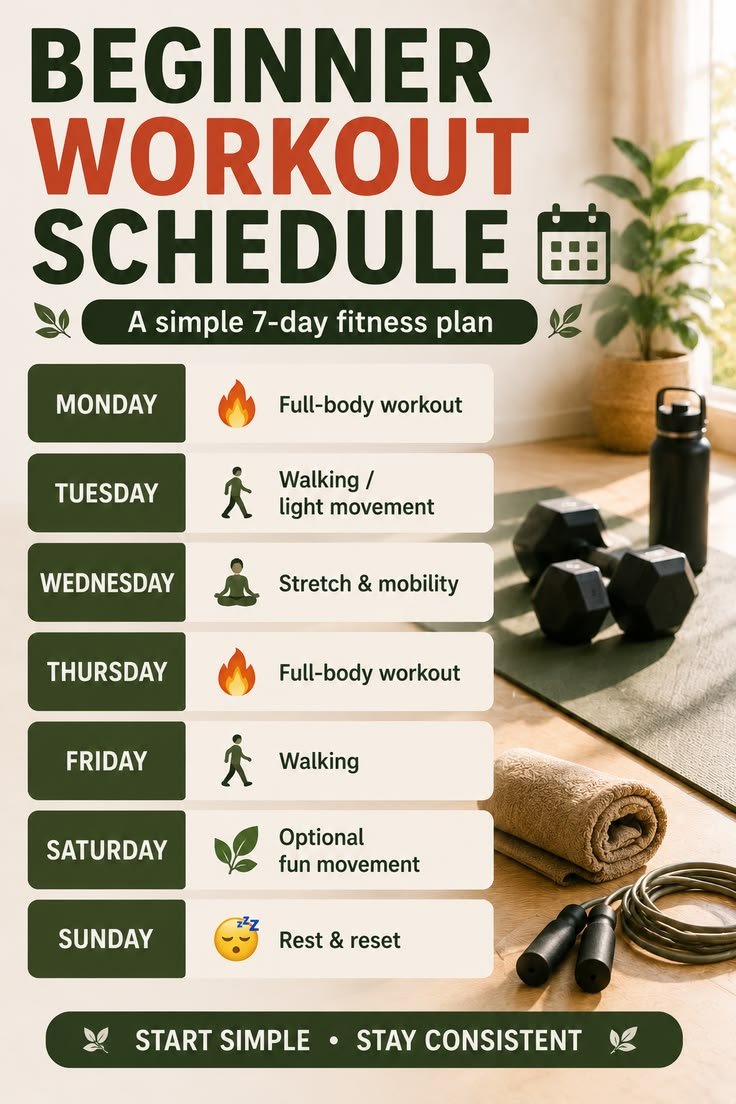
Creating a weekly workout schedule can make exercise easier to organize and maintain. Instead of deciding what to do every time you want to exercise, you can plan your activities in advance and give yourself enough time for movement, rest, and recovery.
A good workout schedule does not need to be complicated. Beginners can start with a few exercise sessions each week and gradually develop a routine that fits their daily responsibilities. The goal is to create a schedule that is realistic, balanced, and safe.
Your schedule should also allow flexibility. Some days may be busy because of school, work, family activities, or other responsibilities. Missing or changing one workout does not mean you have failed. You can simply adjust the rest of the week.
Start by Understanding Your Goals
Before creating a weekly workout schedule, think about what you want exercise to help you achieve.
Your goal might be to:
- Improve general fitness
- Develop physical strength
- Improve flexibility
- Become more active
- Improve balance and coordination
- Build better exercise habits
- Support participation in a sport
Your goals can help determine which activities you include.
For example, someone interested in improving strength might include bodyweight exercises such as squats, push-ups, lunges, and planks. Someone interested in general fitness might combine strength exercises with walking, cycling, dancing, or another enjoyable activity.
You do not need to choose only one goal. A balanced routine can include several types of physical activity.
Consider Your Current Fitness Level
A schedule should match your current ability.
If you are new to exercise, starting with demanding workouts every day is unnecessary. Begin with manageable sessions and allow yourself time to adapt.
For example, a beginner might start with three strength-focused workouts during the week, separated by easier days.
Someone who already participates in regular physical activity may be comfortable with a different schedule.
The important thing is to avoid making the first week so difficult that you cannot maintain the routine.
Choose the Days You Can Exercise
Look at your normal week and identify days when you have enough time for exercise.
You might have more free time on certain days and less on others.
For example:
Monday: Available for exercise
Tuesday: Busy
Wednesday: Available
Thursday: Busy
Friday: Available
Saturday: More free time
Sunday: Rest or light activity
This gives you a basic structure.
You can then decide what type of activity belongs on each day.
Include Different Types of Exercise
A balanced weekly schedule can include several types of movement.
These may include:
- Strength training
- Walking
- Cardio activities
- Mobility exercises
- Flexibility work
- Balance exercises
- Recreational activities
- Rest
You do not need to perform every type of activity every day.
For example, you could use strength exercises on some days and lighter activities on others.
This variety can make your routine more interesting and help you avoid repeatedly stressing the same movements.
Plan Strength Training Days
Strength exercises can be performed at home without equipment.
Some beginner-friendly exercises include:
- Bodyweight squats
- Wall push-ups
- Incline push-ups
- Reverse lunges
- Glute bridges
- Calf raises
- Bird dogs
- Planks
- Step-ups
You can choose several exercises and perform them during a short session.
A beginner does not need a complicated workout containing dozens of exercises.
Focus on controlled movement and good technique.
Give Your Body Recovery Time
Recovery is an important part of a weekly schedule.
Your body needs time to rest between demanding sessions.
Instead of performing challenging strength workouts every day, you can place easier activities or rest days between them.
For example:
Monday: Strength
Tuesday: Light activity
Wednesday: Strength
Thursday: Rest
Friday: Strength
Saturday: Easy recreational activity
Sunday: Rest
This is only an example. Your own schedule can look different depending on your activities and responsibilities.
Add Walking or Light Activity
Walking is an easy way to stay active on days when you are not doing a structured workout.
You can walk around your neighborhood, walk with family members, or simply include more movement during your normal day.
The intensity does not need to be high.
Light activity can also provide a break from sitting for long periods.
If you have been studying or working at a desk, getting up and moving around can be a simple way to add more activity to your day.
Include Flexibility and Mobility
Flexibility and mobility exercises can be added to your weekly routine without requiring a separate long workout.
You can spend a few minutes after certain exercise sessions performing gentle stretches.
Useful movements may include:
- Calf stretches
- Hamstring stretches
- Quadriceps stretches
- Shoulder stretches
- Gentle hip movements
- Controlled torso rotations
Mobility exercises can also be included during warm-ups.
Keep the movements comfortable and avoid forcing your range of motion.
Create a Realistic Workout Length
Your workout does not need to take a long time.
A short, focused workout can be easier to maintain than a long session that leaves you exhausted.
For example, a beginner might choose a 20- to 30-minute session.
You can divide that time into:
- Warm-up
- Main exercises
- Short breaks
- Cool-down
If you have more time on another day, you can make that session slightly longer.
The best schedule is one that fits your normal life.
Use a Warm-Up
Before beginning a workout, spend a few minutes gradually preparing your body.
A warm-up might include:
- Walking
- Marching in place
- Arm circles
- Shoulder rolls
- Gentle squats
- Easy lunges
The warm-up should not leave you tired.
Its purpose is to help you transition into exercise and prepare for the movements you are about to perform.
Plan Your Exercises in Advance
Knowing what exercises you will perform can make your workout more organized.
For example, a simple full-body session could include:
Exercise 1: Bodyweight squats
Exercise 2: Incline push-ups
Exercise 3: Reverse lunges
Exercise 4: Glute bridges
Exercise 5: Bird dogs
Exercise 6: Plank
You can adjust the number of sets and repetitions according to your fitness level.
Do not feel that you have to complete every exercise if you become tired or your technique begins to suffer.
Keep Track of Your Routine
Writing down your workouts can help you understand your progress.
You could record:
- Date
- Exercises
- Sets
- Repetitions
- Exercise variations
- How the session felt
For example:
Monday
Squats — 2 sets
Incline push-ups — 2 sets
Glute bridges — 2 sets
Bird dogs — 2 sets
After several weeks, you can look back and see how your routine has changed.
You may notice that an exercise that once felt difficult now feels more comfortable.
Avoid Changing Everything at Once
When people begin a new workout routine, they sometimes try to make too many changes at once.
They may exercise more frequently, increase workout length, add many new exercises, and attempt difficult movements immediately.
This can make the schedule difficult to maintain.
Instead, change one part of your routine at a time.
For example, you might first establish three weekly workouts. Once that habit feels comfortable, you can gradually introduce a new exercise or movement variation.
Make Room for Other Activities
Exercise should fit into your life rather than taking over your entire schedule.
You may have school, homework, family responsibilities, hobbies, social activities, and time for relaxation.
A good weekly schedule makes room for these things.
You do not need to spend every free hour exercising.
Rest and other activities are also part of maintaining a healthy routine.
Have a Backup Plan
Sometimes your planned workout will not be possible.
You might have an unexpected responsibility, feel tired, or have less time than expected.
Instead of abandoning the entire week, have a simple backup option.
For example, if you planned a 30-minute workout but only have 10 minutes, you could perform a shorter session with a few basic exercises.
You could also move the workout to another day.
Being flexible can make it easier to maintain your routine over time.
Example Beginner Weekly Schedule
Here is one simple example:
Monday — Full-Body Strength
Perform several beginner-friendly bodyweight exercises, followed by a short cool-down.
Tuesday — Light Activity
Take a comfortable walk or participate in another enjoyable activity.
Wednesday — Full-Body Strength
Repeat a basic strength routine using controlled movements.
Thursday — Rest or Gentle Mobility
Take a rest day or perform a few comfortable mobility exercises.
Friday — Full-Body Strength
Perform another manageable strength session.
Saturday — Recreational Activity
Choose something enjoyable, such as walking, cycling, dancing, or another suitable activity.
Sunday — Rest
Give your body time to recover.
This schedule is only an example. Your own week can be arranged differently.
Adjust Your Schedule When Needed
A workout schedule should not be treated as something that can never change.
If Monday becomes too busy, move the workout to Tuesday.
If you are unusually tired, choose light activity or rest instead of forcing a demanding session.
If an exercise causes pain, stop and choose another movement or seek appropriate advice.
The ability to adjust your plan is an important part of creating a sustainable routine.
Focus on Consistency
Consistency does not mean exercising every single day.
It means regularly making time for appropriate physical activity while allowing enough recovery.
A simple routine performed regularly is often easier to maintain than an overly complicated schedule.
You can start with a small number of sessions and gradually build from there.
The important thing is to make exercise a normal part of your week without allowing it to interfere with necessary rest, school, work, or other responsibilities.
Listen to Your Body
Pay attention to how you feel before, during, and after exercise.
Normal tiredness after activity is different from sharp pain or unusual symptoms.
If you experience significant pain, dizziness, breathing difficulty, or another concerning symptom, stop exercising and seek help from a parent, guardian, coach, teacher, or qualified healthcare professional.
Your workout schedule should support your well-being, not force you to exercise when your body needs attention or recovery.
A weekly workout schedule works best when it is simple, flexible, and appropriate for your current fitness level. Start with manageable activities, include different types of movement, schedule rest days, and gradually adjust your routine as you gain experience.
Leave a Reply